Summer of '82


Watching the eclipse yesterday with my welding helmet reminded me of the summer of 1982, when I worked in the shipyards. I came home from my Junior year in college and showed up to work at Stapp Towing, where I had worked since 1976. Stapps always let me go away to school, and when I got back home, I would show up for work as if I had never been away. That is what is great about a family-owned business: they treated me as one of their own.
The first day I showed up for work that summer, I sat in Bruce Stapp’s office to get my “marching orders”. He told me about the tugboat ‘Mary E. Stapp’ that had caught fire about a month earlier and that he wanted us to rebuild her while I was home. Also, he bought two petroleum barges that he wants to convert to deck barges. Looks like this was going to be a busy summer.
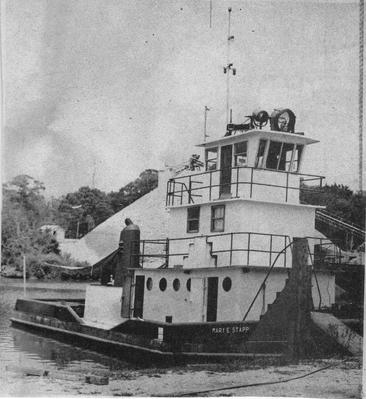
This is the Mary before the fire
I drove out to where the boats are docked to see what condition the Mary is in. I was very familiar with the Mary, and when I pulled up next to her, she was almost unrecognizable as the boat I knew. The fire was above the waterline, so all the steel decks and bulkheads were rusting and warping. The clean white-and-blue paint was only a memory now. It broke my heart to see her this way. As I walked around the boat to survey the damage, it was like walking through a ghost ship. I knew the rooms, but I did not recognize them.
The first thing we did was cut the wheelhouse off, and we used a crane to lift it onto a trailer. We sent the wheelhouse to the shop about ten miles away, where it could be rebuilt. We pretty much scrapped the rest of the boat above the main deck. We went through a lot of acetylene and oxygen bottles those days. We had daily deliveries of many bottles to keep up with our work. Once we got the boat torn down to the main deck, Bruce moved our small crew over to work on the barges while another crew continued rebuilding the Mary.
One of the barges was brought up to the dock, where we could work on it. Since this was a petroleum barge and we were converting it to a deck barge, we had to cut out all the pipelines. The above-deck pipelines were no problem; I think we had them removed on the first day. It was the pipelines that were below deck that was the most work. There were ten tanks in the barge, five tanks on each side. On a barge like this, there is a main line that runs from bow to stern, feeding each tank, and it is about two feet in diameter. There were large valves in each tank used during the loading and unloading of the barge. We had to cut the main pipeline into about 10-foot sections that we could lift out with a crane. We had cut the hatches larger to fit the pipeline and valves through as they were pulled out. We also cut holes at the opposite end of each tank so we could install high-speed pneumatic fans to blow fresh air in. To add to the frustration, the last load this barge carried was crude oil, so the thick, black, muddy oil was everywhere. Every once in a while, a cutting torch would start a slow-burning fire either inside the pipeline or on the floor of the tank. We had fire hoses set up in the tanks to put out the fires.
The summer heat was bearing down on us, and working inside the barge, which acted as an oven, made it about 115–120°F. We could only work about 15 – 20 minutes before we had to climb out for fresh air and to cool off. At the end of one day, I talked with Bruce about us working at night instead, so that it would be a little cooler. He agreed. We took the next day off and came back to work the next evening. There were four or five of us on this crew. Around midnight, we broke for lunch, and since lunch during the day was always provided by the Stapps, we had to find a place open 24 hours to get some food. There was a Denny’s a few miles away, so we went there. When we left the table to pay, I noticed that our oily clothes had made a mess of the chairs we were sitting in. The next night we went back, and they had prepared a place for us in the back dining room, and all the chairs at our table were covered with plastic. I thought that was great in that they accommodated us instead of not allowing us to eat. Good business sense. I wonder if that would happen today.
Once we got all the pipeline removed and the deck welded up, that barge was taken away from the dock and taken out to the parking fleet. The second barge was brought to the dock for us to work on. I think we spent about four weeks converting both barges.
Once the barges were finished, we were put back to working on the Mary. The crew that had been working on her made good progress; the bottom two deck houses were welded into place. I was put to work welding while others from my crew were put to work with plumbing and wiring. The welding above deck was not so bad since we had a good breeze coming off of Galveston Bay.
The day came when we were ready for the wheelhouse, and it was brought out to us on a trailer. It had been rebuilt, and most of the electronics and boat controls were already installed. It was lifted onto the top deck, and we welded it into place. We cut holes in the deck where the control and electrical systems would connect the wheelhouse to the rest of the boat.
Standing back from the boat on land and looking back at it, she seemed more like a workboat. It was good to see that she was getting her life back.
I learned a new kind of welding that summer, stainless steel. I helped weld the stainless handrails that went around all the decks. That type of welding left a much prettier weld, but we also knew we had to make it look really good, since that is the weld everyone would see.
One day, I was given the task of starting up the engines since I was one of the mechanics. The Mary had two Cummins KTA-1150 Marine engines for the mains and two Perkins straight six for the generators. I got one of the generators running first, which helped the guys working on the electrical test their work. The second generator was no problem either. The mains was another thing. We used air pressure to spin the starters, so getting enough pressure to spin the engines that had sat idle for several months took some finessing. The afternoon we pulled the starter handle to fire up the port engine —and it fired —was a really fun time—hearing the engine running really made our day. The next day, we got the starboard engine running.
Mary was coming back to life; she looked different since we redesigned her. She looked like a new boat. Every day, there were problems we had to work through, electrical, plumbing, and hydraulics.
On my last day there that summer, a crew that operates the boat showed up to get it ready to go out to the Houston Ship Channel to pick up a barge and bring it into the yard. I really wanted to go but I was leaving the next day to go back to school and we were not sure when the Mary would be back in the yard. We got the engines running and tested the controls from the wheelhouse. The hydraulic lines that operated the main rudders still had air in the lines, so when the captain would try to move the rudders, someone had to be back at the rams with a sledgehammer to hit the rudder to get them moving in the direction needed. I stood on the bank and watched as the Mary pulled away. The Captain pulled the air horn, and the valve stuck, so the horn would not stop. I could hear the compressors trying to keep up, but the horn was draining the air tanks faster than the compressors could make air. The horn's sound changed as the air pressure dropped, and it sounded sad. I was laughing so hard watching this that I had tears in my eyes. Between the guys with sledgehammers on the stern of the boat, hitting the rudders and the air horn draining the air, it was a funny scene.
I recalled all of this because yesterday I used a welding helmet to look at the eclipse. Holding that helmet brought back a flood of memories of the time I made my living wearing one. I miss those days, but I am glad for what I do today.

Copyright © Bill Overton
All rights reserved.